
เมื่อ AI ไม่ใช่เรื่องไกลตัว: ข้ามเวลาส่องอดีต ทะลุมิติสู่อนาคตสมองกล
ทุกวันนี้หันไปทางไหนก็มีแต่คนพูดถึง AI จนบางทีก็แอบคิดนะว่า ถ้าเราไม่เข้าใจมันจริง ๆ จะตกขบวนไหม? หรือถ้าใช้ไม่เป็น คอมพิวเตอร์จะมาแย่งงานเราหรือเปล่า?
เอาจริง ๆ AI ไม่ใช่เรื่องไกลตัว หรือหุ่นยนต์ล้ำยุคจากหนังไซไฟหรอกครับ ถ้าให้พูดภาษาชาวบ้าน AI หรือ ปัญญาประดิษฐ์ (Artificial Intelligence) มันก็คือ “สมองกลที่มนุษย์สร้างขึ้นมาให้คิดเป็น” ฟีลเหมือนเราเลี้ยงเด็กคนหนึ่งให้คอยจำคอยเรียนรู้สิ่งต่าง ๆ นั่นแหละ
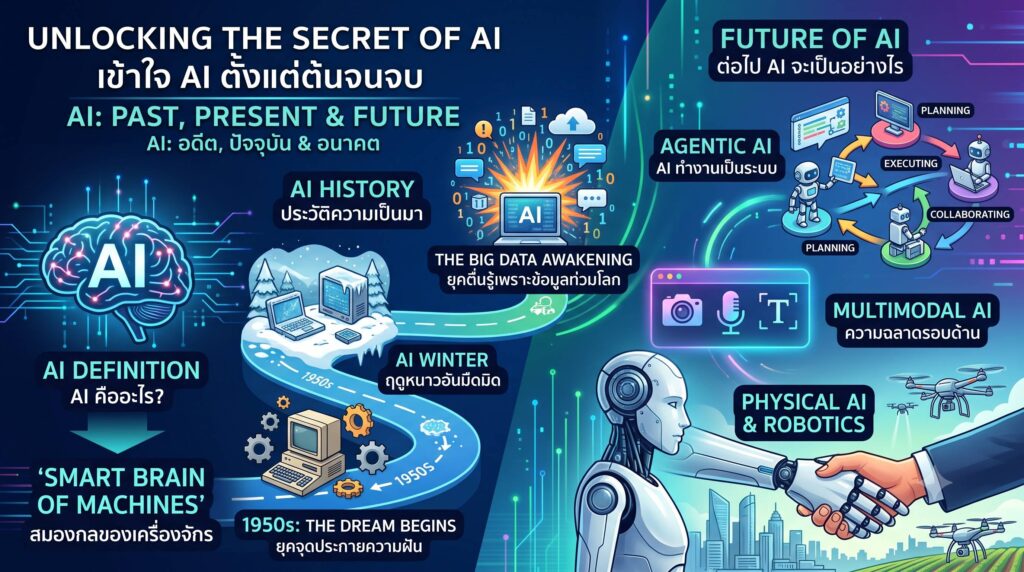
ถ้าอยากเข้าใจ AI แบบง่าย ๆ ลองนึกถึง 3 ข้อนี้ดูครับ:
- มันทำงานด้วยการ “จำแล้วเอาไปทำตาม”: คอมพิวเตอร์ยุคก่อนเหมือนหุ่นยนต์หน้าซื่อที่ทำตามคำสั่งเป๊ะ ๆ สั่งให้เดินก็เดิน แต่ AI ยุคนี้คือเราโยนรูปแมวให้มันดูเป็นแสน ๆ รูป จนระบบการเรียนรู้ของมัน (Machine Learning) ร้องอ๋อแล้วแยกแยะลักษณะเด่น (Pattern Recognition) ได้เองว่า ตัวไหนคือแมว ตัวไหนคือหมา
- ระบบแนะนำหลังบ้านที่รู้ใจเราสุด ๆ: ลองสังเกตไหมครับ เวลาเราไถฟีดดูคลิปสั้นเพลิน ๆ แล้วจู่ ๆ ก็มีแต่คลิปแนวที่เราชอบโผล่ขึ้นมาไม่หยุด ราวกับมันเข้ามานั่งกลางใจเรา นั่นแหละครับคือ AI เฉพาะทางที่กำลังทำงานอยู่ ผ่านระบบช่วยคัดกรองและแนะนำคอนเทนต์ (Recommendation Algorithm) มันคอยแอบดูพฤติกรรมเราแล้ววิเคราะห์ว่าเราชอบอะไร
- มันคิดแทนเราได้ แต่ยังแทนที่ “หัวใจ” เราไม่ได้: AI เก่งเรื่องประมวลข้อมูลดิบหลักล้านได้ในเสี้ยววินาที แต่สิ่งที่มันยังทำไม่ได้คือความรู้สึกเห็นอกเห็นใจ (Empathy) หรือไอเดียสร้างสรรค์ที่มาจากประสบการณ์ชีวิตจริง ๆ ของมนุษย์
AI ไม่ใช่สิ่งที่น่ากลัวเลยครับ มองมันเป็น “ผู้ช่วยมือขวา” ที่พร้อมทำงานหนัก ๆ แทนเราดีกว่า ยุคนี้คนที่จะอยู่รอดและโตได้ไว ไม่ใช่คนที่เก่งที่สุด แต่คือคนที่รู้ว่าจะป้อนคำสั่ง (Prompt Engineering) ให้ AI ทำงานแทนเราได้อย่างไรต่างหาก… แล้วคุณล่ะครับ วันนี้เริ่มลองสั่งงานผู้ช่วยคนนี้หรือยัง?
รู้ไหมว่าความฉลาดล้ำของ AI ที่เราเห็นกันจนชินตาตอนนี้ จริง ๆ แล้วมันไม่ได้เพิ่งมาเก่งเอาปีสองปีนี้หรอกครับ แต่เบื้องหลังความอัจฉริยะนี้ผ่านการลองผิดลองถูก ล้มลุกคลุกคลานมานานกว่าครึ่งศตวรรษ ถ้าลองไปขุดดูอดีตของมัน คุณจะพบสตอรี่ที่สนุกและหักมุมยิ่งกว่าละครซะอีก
เอาจริง ๆ ประวัติของ AI ถ้าสรุปให้เข้าใจง่าย ๆ มันแบ่งออกเป็น 3 ช่วงเวลาหลัก ๆ ครับ:
- ยุคจุดประกายความฝัน (ปี 1950s): ทุกอย่างเริ่มต้นจากชายชื่อ อลัน ทัวริง ที่ตั้งคำถามกวน ๆ แต่เปลี่ยนโลกว่า “คอมพิวเตอร์คิดเองได้ไหม?” จนเกิดเป็นแบบทดสอบความฉลาดของจักรกล (Turing Test) จากนั้นกลุ่มนักวิทยาศาสตร์ก็มารวมตัวกันจัดงานสัมมนาแล้วตั้งชื่อคำว่า “Artificial Intelligence” ขึ้นมาเป็นครั้งแรก ยุคนั้นทุกคนไฟแรงมาก นึกว่าอีกแค่ 10 ปีคอมพิวเตอร์จะฉลาดเท่าคน แต่สุดท้ายก็เหลวเพราะคอมพิวเตอร์ยุคนั้นพลังประมวลผล (Computing Power) ต่ำเตี้ยเรี่ยดินจนทำอะไรไม่ได้เลย
- ยุคฤดูหนาวอันมืดมิด (AI Winter): พอทำไม่ได้ตามที่โม้ไว้ เงินทุนสนับสนุนจากรัฐบาลก็โดนตัดเกลี้ยง ฟีลเหมือนคนรักกันแล้วโดนเทดื้อ ๆ โครงการต่าง ๆ ต้องพับเก็บไปนอนฝุ่นจับอยู่หลายสิบปี เพราะเทคโนโลยีและฮาร์ดแวร์ในขณะนั้นมันตามจินตนาการของมนุษย์ไม่ทัน
- ยุคตื่นรู้เพราะข้อมูลท่วมโลก: จุดเปลี่ยนสำคัญคือตอนที่โลกเรามีอินเทอร์เน็ตและข้อมูลมหาศาล (Big Data) ลองนึกภาพสมมติว่าเรากำลังสอนเด็กหัดเดิน ยุคก่อนเราไม่มีคู่มืออะไรให้เลย แต่ยุคนี้เรามีคลิปวิดีโอ มีข้อมูลคนเดินให้มันดูเป็นล้าน ๆ ตัวอย่าง พอ AI มีข้อมูลสำหรับใช้ฝึกสอนระบบ (Training Data) มหาศาล บวกกับชิปคอมพิวเตอร์และโครงข่ายประสาทเทียม (Neural Networks) ที่แรงขึ้นแบบก้าวกระโดด มันเลยฉลาดขึ้นอย่างรวดเร็วจนน่าตกใจแบบในตอนนี้ครับ
ประวัติศาสตร์บอกเราเสมอครับว่า สิ่งที่เราคิดว่าเป็นเรื่องมหัศจรรย์ในวันนี้ มันคือหยาดเหงื่อและอัจฉริยภาพของคนที่ยอมถูกมองว่าเพ้อฝันในวันวาน จากสมองกลที่ทำได้แค่คิดเลข ก้าวมาถึงจุดที่ปัญญาประดิษฐ์เชิงสร้างสรรค์ (Generative AI) สามารถเขียนบทความและโต้ตอบกับเราได้แบบนี้… คุณคิดว่าอีก 10 ปีข้างหน้า ประวัติศาสตร์หน้าใหม่ของ AI จะถูกเขียนขึ้นมาในรูปแบบไหนครับ?
ถ้าวันหนึ่งตื่นมาแล้วพบว่าเราไม่ต้องเหนื่อยพิมพ์ข้อความสั่งงาน AI แบบทุกวันนี้อีกต่อไปแล้วล่ะ? ลองคิดดูนะครับว่าภาพอนาคตที่แสนจะสะดวกสบายขนาดนั้น มันจะส่งผลให้วิถีชีวิตและการทำงานของเราเปลี่ยนไปในทิศทางไหนกันแน่
เอาจริง ๆ AI ในอนาคตจะไม่ได้จำกัดอยู่แค่ในกรอบแชตสี่เหลี่ยมบนหน้าจอมือถืออีกแล้วครับ แต่มันกำลังจะกลายร่างเป็น “โครงสร้างพื้นฐาน” ที่แทรกซึมอยู่รอบตัวเราจนกลมกลืนเป็นเนื้อเดียวกับชีวิตประจำวันเลยทีเดียว หากลองคาดการณ์อนาคตที่กำลังจะมาถึง มี 3 สิ่งสำคัญที่เราจะได้เห็นร่วมกันครับ:
- หมดยุคป้อนคำสั่ง สู่ยุคที่ AI คิดล่วงหน้า (Anticipatory AI / Proactive AI): มันจะเลิกเป็นฝ่ายนั่งรอรับพรอมต์จากเรา แต่จะขยับมาเป็นผู้ช่วยที่คอยสังเกตพฤติกรรม สภาพแวดล้อม และบริบทรอบตัว (Context-Awareness) แล้วยื่นมือเข้ามาจัดการสิ่งต่าง ๆ ให้ล่วงหน้าก่อนที่เราจะเอ่ยปากร้องขอซะอีก
- การเชื่อมต่อโลกจริงและโลกเสมือนแบบไร้รอยต่อ: ลองนึกภาพสมมติว่าคุณกำลังวางแผนปรับปรุงพื้นที่ทำมาหากินหรือจัดโซนพื้นที่สวนสักแห่ง แค่คุณสวมแว่นตาอัจฉริยะที่เป็นเทคโนโลยีผสานสิ่งแวดล้อมจริงเข้ากับวัตถุเสมือน (Spatial Computing / Augmented Reality – AR) AI จะทำหน้าที่คำนวณตำแหน่ง ทิศทางแสงแดด หรือระบบน้ำ แล้วจำลองภาพกราฟิก 3 มิติขึ้นมาซ้อนทับบนพื้นที่จริงให้เห็นตรงหน้าทันทีโดยไม่ต้องไปนั่งเขียนแบบให้เสียเวลา
- ความฉลาดระดับวิเคราะห์อารมณ์และจังหวะชีวิต: ด้วยเทคโนโลยีการตรวจจับอารมณ์ความรู้สึก (Affective Computing) AI จะเข้าใจความต้องการลึกซึ้งของมนุษย์มากขึ้น สามารถประมวลผลสัญญาณชีพ น้ำเสียง และจังหวะการทำงานของเราเพื่อปรับเปลี่ยนรูปแบบการช่วยเหลือให้เข้ากับสถานการณ์ในขณะนั้นได้อย่างแนบเนียนที่สุด
[ Generative AI ] ───> [ Agentic AI ] ───> [ AGI (Artificial General Intelligence) ]
(รับคำสั่ง-ตอบกลับ)      (วางแผนและทำงานเอง)     (ฉลาดรอบด้านเท่าเทียมหรือเหนือกว่ามนุษย์)
สุดท้ายแล้ว อนาคตของคอมพิวเตอร์และปัญญาประดิษฐ์ไม่ได้ขึ้นอยู่กับว่าระบบมันจะล้ำหน้าจนเข้าใกล้ความฉลาดระดับเทียบเท่ามนุษย์ (AGI – Artificial General Intelligence) และคิดแทนเราได้ไกลแค่ไหน
แต่มันขึ้นอยู่กับว่าพวกเราในฐานะมนุษย์ จะพัฒนาทักษะและความคิดสร้างสรรค์ เพื่อทำงานร่วมกันระหว่างมนุษย์และ AI (Human-AI Collaboration) ได้อย่างไรต่างหาก เพราะในโลกยุคหน้า คนที่ควบคุมเทคโนโลยีได้ คือคนที่จะกำหนดอนาคตของตัวเอง
==============================
When AI is Closer Than You Think: Traveling to the Past, Leaping Into the Future of Artificial Intelligence
These days, you can’t turn anywhere without hearing someone talk about AI. It’s completely normal to wonder: “If I don’t truly understand this, am I going to be left behind? Is a computer going to steal my job?”
But let’s bring this down to earth. AI, or Artificial Intelligence, isn’t some far-fetched, ominous robot from a sci-fi movie. In plain English, it is simply a “digital brain created by humans to think.” Think of it like raising a child—constantly feeding it information so it can remember and learn from the world around it.
3 Simple Keys to Understanding AI Today
If you want to grasp how AI works without getting bogged down in tech jargon, just keep these three concepts in mind:
- It works by “remembering and mimicking”: Traditional computers are like literal-minded robots—they only do exactly what they are programmed to do. If you tell it to walk, it walks. AI, on the other hand, relies on Machine Learning. If you show it hundreds of thousands of cat photos, its system triggers a Pattern Recognition response. It figures out on its own what makes a cat a cat, and how it differs from a dog.
- The background recommendation system that reads your mind: Have you ever scrolled through short videos and suddenly realized the feed is flooded with exactly what you love? It feels like the app is living in your head. That is narrow AI at work via a Recommendation Algorithm. It quietly observes your behavior and analyzes your preferences to curate your perfect feed.
- It can think for us, but it can’t replace the “human heart”: AI is a powerhouse at processing millions of raw data points in a split second. However, what it completely lacks is Empathy and genuine creativity born from real-life human experiences.
The Bottom Line: AI isn’t something to fear. It is your ultimate “right-hand assistant,” ready to take on the heavy lifting. In this era, the people who thrive won’t necessarily be the smartest, but rather those who know how to master Prompt Engineering to make AI work for them.
The Hidden History: A 70-Year Rollercoaster Ride
The mind-blowing AI capabilities we see today didn’t just appear overnight. Behind this brilliance lies over half a century of trial, error, failure, and breakthroughs. If you dig into its past, you’ll find a plot twist-filled story that is wilder than a movie.
The history of AI can be broken down into three major eras:
1. The Spark of a Dream (1950s)
It all started with a man named Alan Turing, who asked a simple yet world-changing question: “Can machines think?” This led to the creation of the Turing Test to measure machine intelligence. Shortly after, a group of scientists gathered at a conference and coined the term “Artificial Intelligence” for the first time. Everyone was incredibly hyped, predicting that computers would match human intelligence within a decade. Spoiler alert: they failed miserably because the Computing Power of that era was practically non-existent.
2. The Dark AI Winter
Because the tech couldn’t live up to the massive hype, government funding evaporated completely. It was the ultimate ghosting. AI projects were shelved and left to gather dust for decades because the hardware and technology simply couldn’t keep pace with human imagination.
3. The Big Data Awakening
The ultimate turning point came with the birth of the internet and the explosion of Big Data. Imagine trying to teach a child to walk without any guide vs. having millions of video examples. Suddenly, AI had massive amounts of Training Data to learn from. Combined with powerful computer chips and advanced Neural Networks, AI capabilities skyrocketed at a staggering, almost frightening pace.
The Future: Moving Beyond the Chatbox
What if you woke up tomorrow and didn’t even have to type out prompts to get AI to work? How would that seamless convenience reshape our lives and careers?
In the near future, AI will break free from the square chatboxes on our phone screens. It is evolving into an invisible “infrastructure” woven into the very fabric of our daily lives. Here are the three major shifts we are about to witness:
- From Prompting to Anticipating (Proactive AI): AI will stop waiting around for your commands. Instead, it will use Context-Awareness to observe your behavior, environment, and habits, stepping in to handle tasks for you before you even think to ask.
- Seamless Blending of Physical and Virtual Worlds: Imagine you want to renovate your shop or landscape a garden. By putting on smart glasses powered by Spatial Computing and Augmented Reality (AR), the AI will instantly calculate spacing, sunlight angles, and water systems—overlaying a 3D graphic right onto your physical space without you ever needing to draft a blueprint.
- Emotional and Behavioral Intelligence: Through Affective Computing (emotion recognition tech), AI will understand human needs on a deeper level. It will analyze vitals, vocal tones, and work rhythms to adjust its assistance flawlessly to match your current mood and situation.
[ Generative AI ]  ───>  [ Agentic AI ]  ───>  [ AGI (Artificial General Intelligence) ]
(Receives prompts       (Plans and executes       (Versatile intelligence equal to
  and responds)            tasks autonomously)       or surpassing human capability)
Shaping Tomorrow
Ultimately, the future of AI isn’t about how close machines get to Artificial General Intelligence (AGI) or how much they can think for us.
It depends entirely on how we, as humans, develop our skills and creativity to foster true Human-AI Collaboration. In the next era, the people who master the technology will be the ones who write their own future.
======================